December 22nd, 2025
Empathic Architecture
Architectural theory has increasingly questioned the adequacy of purely formal, object-centered models of design. Parallel to developments in philosophy, aesthetics, and the cognitive sciences, attention has shifted toward affect, embodiment, and the ways in which spaces are lived, sensed, and emotionally experienced. Within this broader intellectual landscape, empathy has emerged as a key concept for rethinking how humans relate not only to one another, but also to their environments.
This interest in empathy is closely tied to the so-called “emotional turn,” which has foregrounded emotions as constitutive elements of perception and understanding. Rather than treating emotions as secondary or subjective additions to rational thought, contemporary discourse has emphasized their role in shaping experience, orientation, and behavior. For architecture, this shift opens up questions that move beyond form and representation toward atmosphere, relationality, and the embodied encounter with space.
Against this backdrop, architecture can be reconsidered as an incorporated medium of emotional experience—something that is not merely observed, but physically and affectively inhabited. Empathy, understood as a multi-component phenomenon involving both affective resonance and cognitive perspective-taking, provides a conceptual lens through which the relationship between users and built space can be rearticulated. From this perspective, architecture becomes a site where openness to otherness is negotiated, and where spatial configurations may enable or constrain emotional and social interactions.
It is within this theoretical context that Paola Gregory’s book “The Quest for Empathic Architecture. Prospects, Concepts and Critical Aspects“ situates itself. Authored by Paola Gregory, Professor of Architectural Composition at the Polytechnic of Turin, the book emerges from a research trajectory shaped by transdisciplinary inquiry and critical reflection on architectural theory and design. Rather than offering a closed doctrine, it appears to position empathic architecture as an open field of investigation—one that invites further discussion on the emotional, ethical, and relational dimensions of the built environment.
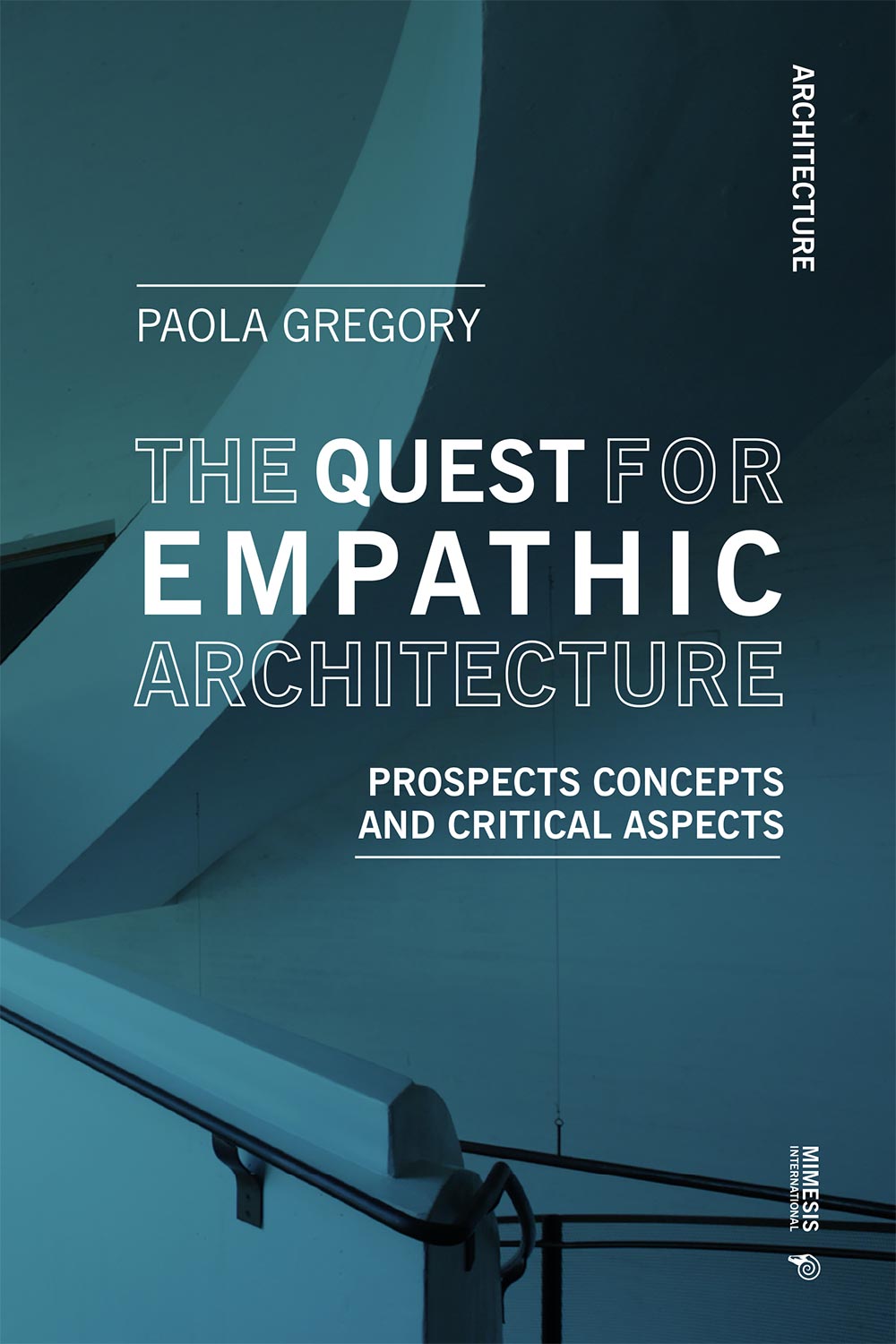
Paola Gregory (2025): The Quest for Empathic Architecture. Prospects Concepts and Critical Aspects. Milano: Mimesis International. ISBN: 9-78886977501-7
224 Pages, $ 25.99 / £ 29.99 / € 23,00