January 27th, 2026
Matter of Type – On Materiality, Metamorphosis, and the Political Life of Typography
What is “matter” in typography? At first glance, the question appears paradoxical. Letters today circulate as code, light, and data—weightless forms that seem to exist without substance. Yet Matter of Type reminds us that typography has always been inseparable from material conditions. Even the most immaterial digital type depends on infrastructures—servers, screens, cables, rare earth minerals—that ground it firmly in the physical world.
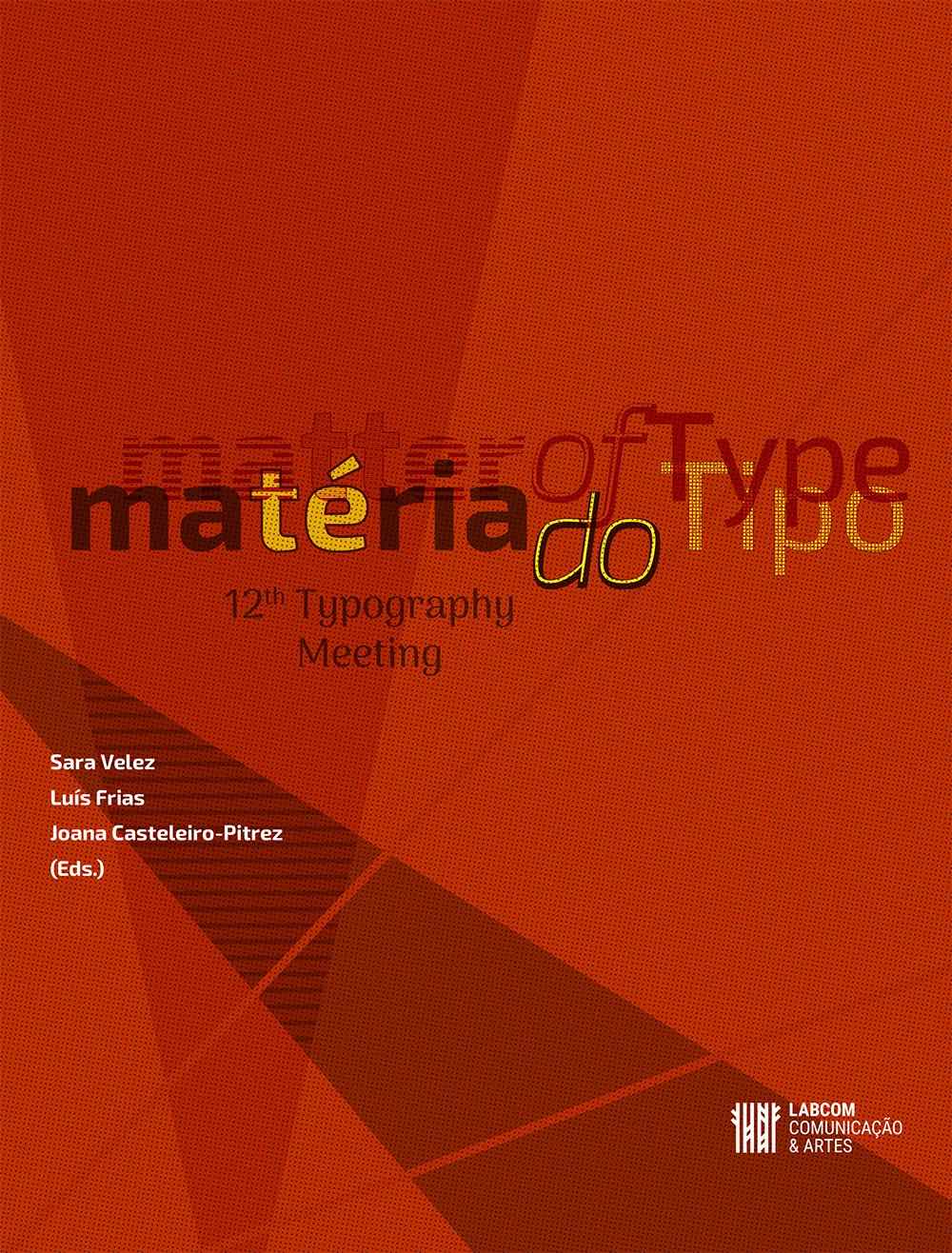
Historically, typography emerged from tangible substances. Wood and metal were not merely neutral carriers of form; they shaped what letters could be. The resistance of material influenced proportion, detail, and reproducibility. Meaning was never detached from matter—it was produced through it. “Matters of Type” (Matéria do Tipo), edited by Sara Velez, Luís Frias and Joana Casteleiro-Pitrez revisits this lineage not nostalgically, but critically, asking what “substance” means in a time when typographic forms are generated, transformed, and distributed digitally.
Between Analog and Digital
One of the central threads running through the publication is the renewed interest in traditional practices. Letterpress, hand lettering, and other analog processes have re-entered contemporary design discourse—not as a rejection of the digital, but as a dialogue with it. Typography today operates in hybrid zones: printed matter informed by algorithms, digital interfaces referencing craft, physical spaces animated by projection and augmented layers.
In this expanded field, “matter” becomes a lens through which to question current practice. If matter is the formless mass awaiting form, what constitutes that mass in digital typography? Is it data? Is it the interface? Is it the cultural and social context in which type operates? The metaphor stretches productively, encouraging us to see typography not as fixed shapes but as processes—flows between tools, platforms, and environments.
Metamorphoses of Form
The idea of matter as ductile and transformable opens another dimension: metamorphosis. Typography today mutates across media—static text becomes motion graphics, print becomes interactive surface, signage becomes immersive environment. The same conceptual “matter” may crystallize as a poster, an app interface, or a spatial installation.
These transformations are not merely aesthetic. They alter how we read, navigate, and understand the world. Typography no longer sits quietly on a page; it moves, responds, and performs. Its materiality shifts accordingly—from ink absorbed by paper fibers to pixels activated by touch. Each transformation redefines what counts as presence, permanence, and authorship.
Tangibility and Experience
If matter refers to what is tangible, typography participates directly in shaping lived experience. Street signage structures movement through cities. Interface typography organizes access to information. Editorial design frames interpretation. In each case, typography becomes part of the material fabric of everyday life.
The book emphasizes that media themselves are part of typography’s matter. The choice of surface, device, or platform is not secondary—it conditions meaning. A message engraved in stone carries a different temporal and symbolic weight than one displayed on a fleeting social media feed. Matter, in this sense, is contextual: it includes the technological, spatial, and cultural environments in which letters operate.
Political, Social, and Environmental Dimensions
Perhaps most compelling is the broader framework the publication proposes. Materiality is never neutral. The infrastructures that sustain digital typography have ecological footprints. The revival of craft traditions intersects with questions of labor and authorship. Design decisions reflect—and shape—social and political realities.
By weaving together historical, cultural, environmental, and political perspectives, Matter of Type positions typography as an active agent rather than a passive medium. The “web of matter” is not only about substances and tools, but about power, access, sustainability, and collective memory.
Why This Book Matters
Matter of Type does not offer a single definition of materiality. Instead, it opens a field of inquiry. It invites designers, typographers, and researchers to reconsider what they work with when they work with type. Not just shapes and fonts—but infrastructures, contexts, histories, and consequences.
When digital forms seem increasingly detached from physical reality, the book insists on reconnecting typography to its material ground. It challenges us to see that even the most ephemeral letterform is anchored in matter—and that through this matter, typography continues to shape how we inhabit the world.
–> Download (Proceedings of the 12th Typography Meeting)